Cybersecurity
Tools, techniques and approaches, and how to recognise threat actor (A person or group that carries out attacks.) behaviour and attack vectors (The way an attacker gets into a system, such as a weak password or an unsafe link.).

Training
Hands-on courses in cybersecurity, cyber forensics, secure coding (Writing software in ways that avoid common security weaknesses.) and databases. For police, enterprise staff and security professionals.
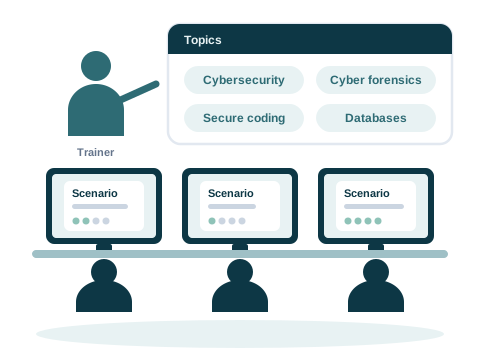
Courses are built around real tools and real cases, for people who will use them at work.
Across our cybersecurity and cyber forensics courses.
Four subjects. Each course is shaped for the group that takes it.
Tools, techniques and approaches, and how to recognise threat actor (A person or group that carries out attacks.) behaviour and attack vectors (The way an attacker gets into a system, such as a weak password or an unsafe link.).
Evidence handling, and how to automate the tools you already use. Advanced topics such as malware analysis (Studying harmful software to learn what it does and how to detect it.), voice forensics (Examining recorded speech as evidence, for example to compare voices.) and triage (Sorting evidence or alerts by urgency, so the most important are looked at first.).
Writing code that avoids common security weaknesses.
Hands-on training in databases, one of the areas we work in.
Courses for each group in the police and other law enforcement, from officers to their leaders.
Courses for IT users and for managers.
Skills that keep up with new threats and threat intelligence (Current information about attackers and their methods.).
Techniques to identify, analyse and investigate an incident.
Training for scene of crime officers (Scene of crime officer. The officer who collects evidence where a crime took place.) and investigators, in forensic science laboratories (Forensic Science Laboratory. A laboratory that examines evidence for the police and courts.) and regional laboratories (Regional Forensic Science Laboratory. A forensic science laboratory that serves one region.).
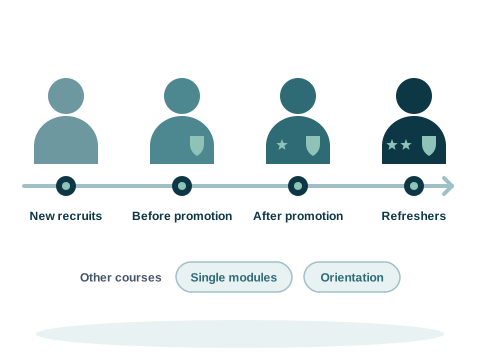
Courses are arranged for each group: for new recruits, before and after a promotion, and as refreshers.
Course types
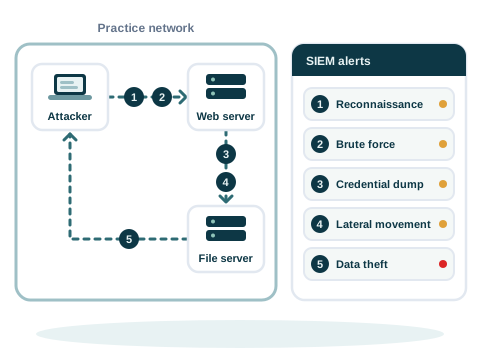
OptikRange is our modular (Built from separate parts, so parts can be added or changed.) cyber range (A practice network where people learn to attack and defend safely.): a practice network where learners run attacks safely, follow them step by step, and watch the alerts they raise in a SIEM (Security information and event management. The system that collects security alerts and logs in one place.).
Who it is for
Four levels
Tell us who you want to train and what they need to learn. Write to info@visiminds.com.