Readiness
Evidence ready before an incident, so an investigation has what it needs.

Security services
Investigations, root cause analysis (Root cause analysis. Finding out what happened in an incident, how, and why.) and readiness: what happened, how, and why. For companies, police and forensic science laboratories.
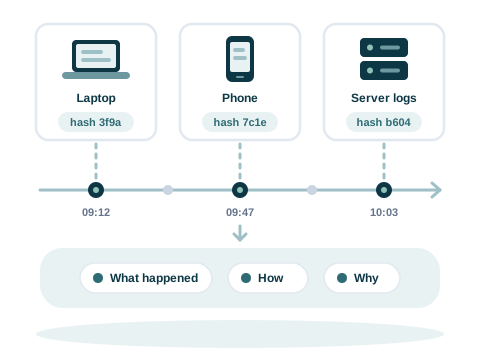
Six areas of work. Each can be shaped for an organisation of any size.
Evidence ready before an incident, so an investigation has what it needs.
Planned and set up for police and laboratories. We help to create new labs, and to add to what existing labs can do.
Custom tools, including AI and language models, and automation for handling evidence.
Classification, cross-referencing (Checking one piece of evidence against others, to confirm it or to find links.) and correlation (Linking alerts and records from different systems to see one event.) of digital evidence (Information stored or sent in digital form that can be used in an investigation, such as logs, files and messages.).
Finding how evidence was hidden or destroyed, and which anti-forensics (Ways criminals hide or destroy digital evidence.) techniques were used.
Hands-on training for investigators, scene of crime officers (Scene of crime officer. The officer who collects evidence where a crime took place.) and police.
We also cover
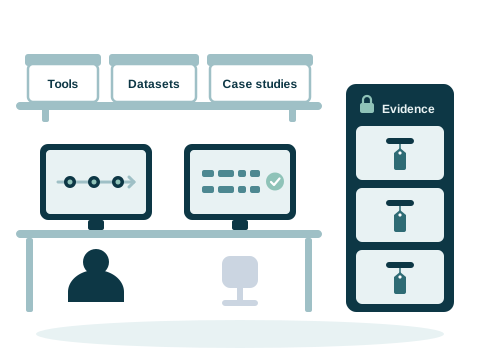
We help police and laboratories create new cyber forensics labs, and add to what existing labs can do.
InfiKnit Forensics
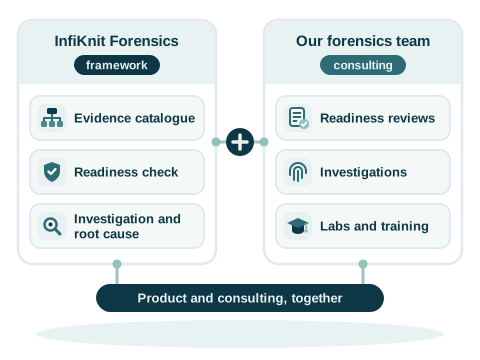
InfiKnit Forensics is our product: a framework for performing cyber forensics (Collecting and examining digital evidence to find out what happened in an incident.) investigations and root cause analysis (RCA). This team provides the consulting around it.
It also classifies digital evidence, checks that an organisation can collect the evidence an investigation needs, and finds what is missing.
Who it is for
Three use cases and one case study that include cyber forensics.
Use case 9 · enterprises
After an incident, evidence is missing or spread across systems. What happened, and why, is not clear.
Use case 12 · police and laboratories
New attacks bring new kinds of digital evidence. Skills must keep up with threats and AI.
Use case 13 · police and laboratories
Digital evidence must be sorted quickly and correctly. The techniques used to hide or destroy it must be found.
Case study 3 · India
Ethical hacking (Attacking a system with the owner's permission, to find weaknesses before a real attacker does.) and penetration testing (An authorised test that attacks a system the way a real attacker would, to find what can be broken.) for a large organisation in India. The work included research on cyber forensics controls for future process changes.
To talk about forensic readiness, a forensics lab, an investigation or InfiKnit Forensics, write to info@visiminds.com.